


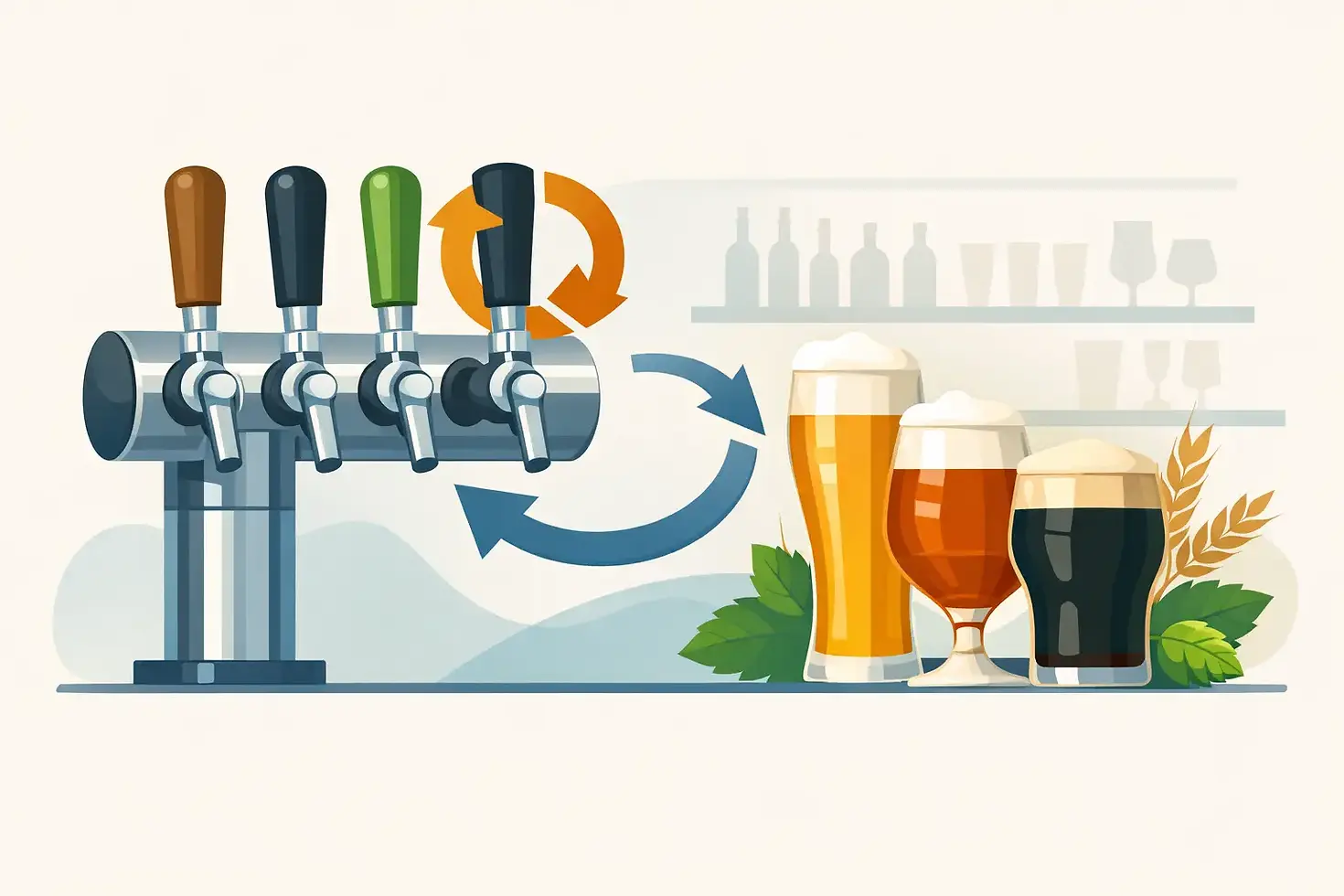
Rotating Taps Explained for Beer Lovers

You spot a beer you loved last month, head back for another pint, and it is gone. In its place sits a hazy pale from a different brewery, a stout you have never seen before, and something wild-fermented that sounds half beer, half dare. That is usually the moment rotating taps explained becomes less of a beer-geek phrase and more of a very practical question.
At a good craft bar, a rotating tap list is not there to make life difficult. It is there to keep things fresh, seasonal and worth coming back for. Instead of locking the same beers onto the lines all year, the selection changes as kegs kick, new releases arrive, weather shifts, and drinkers look for something different. For anyone who enjoys variety without needing a lecture with their pint, rotating taps are one of the best parts of modern bar culture.
Rotating taps explained: what the term actually means
A rotating tap is simply a draft line that does not stay permanently assigned to one beer. Rather than pouring the same lager, IPA or stout every week of the year, that line changes regularly. Sometimes the change is subtle - one pale ale replaced by another. Sometimes it is dramatic - crisp pilsner one week, rich porter the next.
In practice, bars often keep a few core favourites alongside a wider set of changing lines. That balance matters. Too much change can feel chaotic if guests just want a reliable first pint. Too little change, and the list starts to feel stale, especially for drinkers who enjoy discovering new breweries and styles.
The point is not novelty for its own sake. A strong rotating programme is curated. The bar team is thinking about contrast, quality and what feels right to drink at that moment. It should feel exciting, not random.
Why bars use rotating taps
The obvious reason is variety, but that is only part of it. Rotating taps let a bar serve more breweries, more styles and more limited releases without needing an impossible number of lines. If every tap were fixed forever, a beer list would become predictable very quickly.
Freshness is another big factor. Many modern beers - especially hop-forward styles like IPA and pale ale - are at their best when served relatively fresh. Rotation helps keep beer moving. That matters because a great beer sitting too long is no longer a great beer.
There is also a seasonal side to it. In warmer months, people often lean towards lager, sour beer, wheat beer and bright pale ales. When it is colder, darker styles and fuller-bodied beers tend to come into their own. Rotating taps give bars room to respond naturally instead of forcing the same drinking experience all year.
For bars, rotating lines also create energy. Regulars have a reason to return. Visitors get a list that feels alive rather than copied and pasted. In a place built around flavour and atmosphere, that sense of movement makes a real difference.
What rotating taps mean for your pint
For guests, the best part is simple: more choice, more often. You are more likely to find something new, something seasonal, or something from a brewery you have been meaning to try. If you enjoy comparing styles or sharing a few different pours with friends, rotating taps make that much easier.
They also make the drinking experience more connected to place and timing. The beer list this weekend may not be the same next weekend. That can turn an ordinary round into something more memorable, because there is a sense that you are catching a beer while it is here.
Of course, there is a trade-off. If you fall in love with a beer, there is no guarantee it will still be on next time. That is part of the appeal for some people and mildly heartbreaking for others. A good bar softens that by helping you find your next favourite rather than apologising for the last one disappearing.
How bars choose what goes on next
This is where a rotating tap list either feels thoughtful or feels like a lucky dip. The best bars do not just replace one empty keg with whatever happened to arrive. They build a line-up.
Style balance is usually the first consideration. If several taps are already pouring juicy, high-hop beers, the next addition may be something cleaner or darker to keep the list broad. Price point matters too. Not everyone wants a stronger, pricier pint all evening, so a well-shaped list should include easy-drinking options alongside more intense beers.
Brewery mix plays a part as well. A curated programme often blends familiar names with newer producers, local breweries with international ones, and crowd-pleasers with a few more adventurous pours. That way casual drinkers are comfortable, while more engaged beer fans still have something to get excited about.
Timing matters. Some beers are booked in around events, brewery showcases or seasonal moments. Others appear because a particularly good keg became available and the team knew it would land well on the bar. There is planning involved, but also a bit of instinct.
Freshness, line cleaning and why quality control matters
Rotating taps sound fun, but they only really work when the basics are taken seriously. Draft beer quality depends on storage, temperature, petrol setup, line hygiene and staff knowledge. If those things are off, a changing tap list will not save the pint.
Line cleaning is a big one. Every time a keg changes, there needs to be proper process behind the scenes. Beer lines must be maintained correctly so flavours stay clean and one beer does not leave character behind for the next. Nobody wants their crisp lager with a ghost of stout attached.
Cellar practices matter too. Kegs need to be stored and poured in the right conditions, and staff should know how each beer is meant to present. Some styles look best with a tighter head, others with more aroma release. Glassware, pour technique and serving temperature all shape what reaches the table.
That is why rotating taps are usually most enjoyable in places that treat beer as a curated experience rather than just another item to shift across the counter.
How to order confidently from a rotating tap list
You do not need to know every yeast strain in Belgium to enjoy a rotating list. The easiest approach is to start with what you already like, then stretch from there. If you normally drink lager, maybe try a pilsner from a new brewery or a light, dry pale ale. If you like stout, ask whether there is something similar but softer, stronger or more chocolate-led.
A good bar team should be able to guide without making it feel formal. A quick conversation about what you usually drink, whether you want something crisp or fuller, bitter or fruity, can narrow the field fast. Flights or smaller pours can help too, especially if you are curious but not ready to commit to a full pint of something unfamiliar.
It also helps to be open about mood. The right beer depends on the moment. After work, you might want something clean and easy. Late evening with food, maybe something richer. On a social table, mixed styles often work better than everyone ordering the same thing.
Are rotating taps always better than fixed taps?
Not automatically. Fixed taps have advantages. They give consistency, make repeat ordering easy, and keep beloved staples available. For many drinkers, there is real comfort in knowing their preferred pint will be there every time.
Rotating taps are better when the bar knows how to manage them. If the curation is strong and the quality control is tight, they create freshness and discovery that fixed lists cannot match. If the selection feels inconsistent or badly balanced, the experience can become more confusing than enjoyable.
In most cases, the sweet spot is a blend of both. A couple of dependable pours anchor the menu, while the changing lines keep things lively. That gives guests choice without losing the sense of familiarity that makes a bar feel welcoming.
For a venue built around flavour and atmosphere, that balance is where the magic sits. It is one reason places like The Banshee Riga can keep a beer list feeling current without losing the relaxed ease people actually want from a night out.
Why rotating taps keep people coming back
There is a social side to all this that often gets overlooked. Rotating taps give people something to talk about. A new keg goes on, someone orders it out of curiosity, someone else tries a sip, and suddenly the table is discussing citrus, smoke, bitterness or whether it tastes better than last week's pale.
That kind of casual discovery is part of what makes a good bar feel alive. You can still come in for an easy pint, but there is also the option to try something unexpected. For locals, that builds loyalty. For travellers, it gives the place a sense of personality rather than a generic drinks list.
And that is really the heart of rotating taps explained. They are not just a technical beer system. They are a way of keeping the bar fresh, the menu interesting and the experience worth repeating. Next time your favourite beer disappears from the board, it may be less a loss than an invitation to find the next one.



Comments