


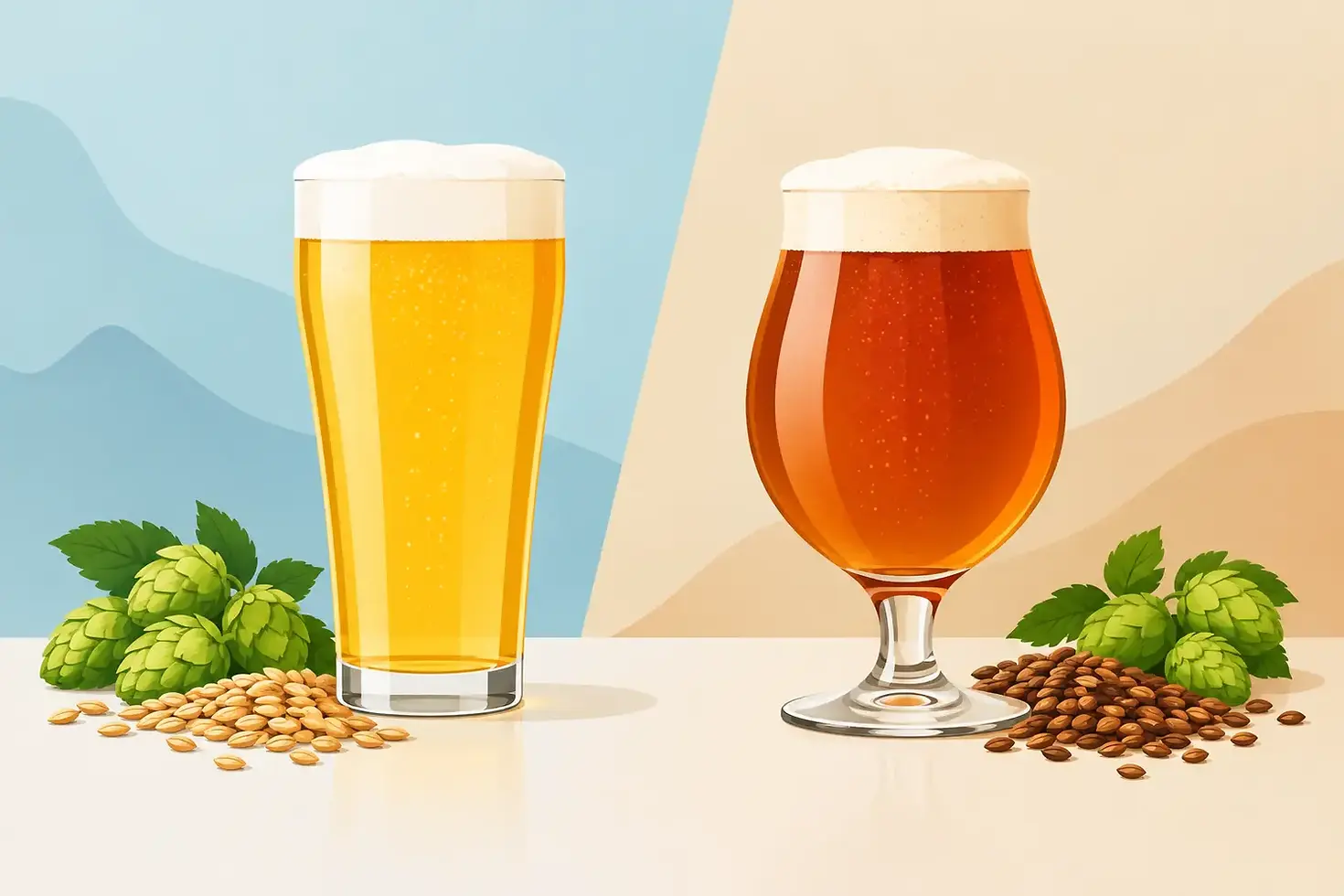
Lager Versus Ale: What’s the Real Difference?

A cold pint arrives at the table, golden under the bar lights, with a clean white head and a promise of refreshment. Is it a lager or an ale? In the lager versus ale conversation, the answer is not simply about colour, strength or whether a beer tastes light. It begins with yeast, then opens into a much more interesting question: what sort of drinking moment are you after?
One can be sharp, crisp and quietly satisfying after a long day. The other may bring citrus, stone fruit, toasted malt or a little wildness to the glass. Both can be beautifully balanced. Both can be easy-drinking or seriously complex. The pleasure lies in knowing enough to order with confidence, while leaving room for a surprise.
Lager versus ale: the key difference
The technical divide is fermentation. Ales are brewed with yeast that works best at warmer temperatures, while lagers use yeast that performs at cooler temperatures and is usually given a longer period of cold conditioning, known as lagering.
That difference affects the finished beer, but it does not dictate every flavour. Ale fermentation often allows more expressive fruity notes to develop. Depending on the style, you might notice orange peel, ripe peach, banana, spice or hedgerow fruit. Lager fermentation generally creates a cleaner profile, allowing malt, hops and a dry finish to come through with greater clarity.
The familiar shorthand is that ales are top-fermented and lagers are bottom-fermented. It is useful, but slightly simplified. Modern brewing is more precise than that, and yeast behaviour can vary with recipe and conditions. For the drinker, the practical point is simple: lager yeast and ale yeast create different starting points for flavour.
Lager is not just pale, and ale is not just dark
A bright yellow pilsner is a lager, but so is a rich, dark Czech-style dark lager. A hazy pale ale is an ale, but so is a nearly black stout. Colour comes mainly from the malt, not from whether the beer is lager or ale.
Strength is equally unreliable as a clue. A sessionable pale ale might sit at a modest ABV, while a strong Belgian-style ale can be warming and intense. Lagers range from delicate table beers to powerful bocks and intensely flavoured Baltic porters. If you have ever assumed that lager means weak or that ale means heavy, a good rotating tap list will quickly prove otherwise.
This is where beer becomes more fun than labels suggest. Style names offer a useful map, but flavour is the destination. A pale lager may be dry and herbal, soft and bready, or brightly bitter. An ale may be clean and restrained or packed with tropical hop character. The brewery’s recipe matters as much as the broad family on the menu.
What lager tends to taste like
Well-made lager rewards attention. Its clean fermentation leaves very little for flaws to hide behind, so balance matters. Freshness, temperature and a properly kept line can make the difference between an ordinary pint and one that feels perfectly timed.
A classic pilsner often offers a firm, refreshing bitterness, floral or herbal hops, and a crisp finish that brings you back for another sip. Helles lagers are usually softer, with gentle bread-crust malt and lower bitterness. Vienna lagers carry a little more toast and caramelised richness, while Märzen-style beers can feel fuller and rounder without becoming cloying.
Lager is often the right choice when you want refreshment without losing character. It works brilliantly with salty snacks, fried food and food with a little heat because its carbonation and dry finish clear the palate. It is also a natural companion to a sociable evening where you would like to keep the conversation moving as easily as the pints.
That does not mean every lager should be served ice-cold. Very low temperatures can mute flavour. A lighter lager benefits from being properly chilled, but a maltier or stronger example opens up a little as it warms in the glass.
What ale tends to taste like
Ale is a broad, lively family. English bitters can be malty, earthy and gently fruity. Pale ales may lean towards grapefruit, pine, passion fruit or soft peach. IPAs can range from dry and bitter to juicy and hazy. Stouts might bring coffee, cocoa, roasted grain and creaminess, while Belgian-inspired ales can show peppery spice, fruit and a deceptively warming finish.
The common thread is not that every ale is fruity or full-bodied. Rather, ale yeast often contributes more noticeable character, giving brewers another layer to shape. That makes ale particularly rewarding for drinkers who enjoy comparing one pour with the next.
A pale ale can be a great bridge for anyone who usually chooses lager but wants to try something new. Look for a lower-ABV, balanced example rather than going straight to the biggest IPA on the board. You may find the familiar refreshment you like, with extra aroma and a softer texture.
For cooler evenings, darker ales often make an excellent choice. A porter or stout can feel luxurious beside rich food, but it does not have to be strong or sweet. Some are remarkably dry and drinkable, with roast bitterness keeping the finish neat.
Choosing your pint by mood, not rules
There is no prize for ordering the most obscure beer on the menu. The best choice is the one that suits the table, the weather, your food and your mood.
If you want something crisp after a day walking around Riga’s Old Town, choose a pilsner, helles or another pale lager. If you are settling in for a longer catch-up and fancy something aromatic, a pale ale or session IPA might be a better fit. If dinner is rich, spicy or fried, lager’s cleansing finish is hard to beat, although a hop-forward pale ale can stand up well to bold flavours. If you are treating the beer as part of the occasion, rather than just a thirst-quencher, explore a darker ale, a Belgian-style beer or a more characterful lager.
It also depends on what else you have had. A delicate lager can be a welcome reset after cocktails or richer beers. Conversely, moving from a subtle lager into a highly hopped IPA can make the earlier beer seem quieter than it really is. Start light and crisp, then move towards fuller, sweeter, hoppier or darker pours if you plan to taste a few styles.
Freshness and serving matter more than many people think
A beer style can only show its best side when it is treated well. Hoppy ales are often at their most expressive when fresh, as their bright aroma can fade over time. Lagers may be more forgiving in some respects, but clean styles still reveal stale notes or poor handling quickly.
Glassware matters too, though not in a fussy way. A clean glass helps maintain the beer’s head and lets its aroma come through. Pouring a little of a canned or bottled beer into a glass can reveal details that disappear when you drink straight from the container.
At a good beer bar, it is always reasonable to ask for a recommendation based on flavour rather than style. Say you want something dry, not too bitter, fruity but not sweet, or dark without being heavy. Those are much more useful clues than simply saying you are an ale drinker or a lager drinker.
At The Banshee Riga, a rotating tap selection makes that conversation part of the experience. A familiar favourite is always welcome, but trying a small pour or asking what is pouring especially well can lead to the pint you remember from the night.
The better question to ask
Lager versus ale is a helpful place to begin, not a finish line. Lager offers precision, refreshment and clarity; ale often brings expressive yeast character and a wider sense of flavour play. Yet the best examples of both share the same qualities: balance, freshness and a reason to take another sip.
Next time you are choosing from the taps, skip the pressure to pick a side. Start with the flavour you want in that moment, trust your curiosity, and let the next good pint give you something new to talk about.



Comments